

AI digital asset management uses artificial intelligence to automate tagging, search, governance, workflows, and content insights within a DAM platform.
For large, enterprise companies, managing brand assets at scale is increasingly complex, even with a DAM solution. Files scatter across different departments, and each region has its own brand rules and permissions to maintain. At the same time, organizations are having to rethink how they manage their digital assets, due to company rebrands or global expansion.
That’s why AI-powered DAM is especially important for enterprise use. It supports effective governance and automation at scale, as well as helping teams speed up manual tasks. AI digital asset management empowers enterprises to scale efficiently while enforcing governance-first controls that protect brand integrity across every channel and market. This guide covers how AI works in DAM along with practical use cases and its core capabilities.
What is AI digital asset management?
AI digital asset management (AI DAM) brings artificial intelligence and automation into the heart of DAM tools. Traditional DAM systems are built around organization — giving teams a centralized place to store, categorize, and retrieve brand assets. But the system itself is largely passive. It stores what you put in and retrieves what you search for.
AI-powered DAMs go further. Where traditional DAM organizes assets, AI DAM interprets, predicts, and optimizes them. Powered by machine learning, natural language processing, computer vision, and generative AI, these platforms can suggest tags for a file, recommend content based on campaign goals, flag outdated or off-brand assets, and surface the right material before a user finishes typing their search. As well as executing instructions, the system learns continuously from user behavior, becoming more accurate and useful over time.
AI digital asset management vs traditional DAM
The difference between traditional and AI-powered DAM ultimately comes down to what the system does with your content.
Traditional DAM stores and organizes — it's a well-structured archive that performs exactly as configured. AI tools interpret, learn, and optimize, turning your asset library into an intelligent content ecosystem that actively supports brand consistency, operational efficiency, and business performance.
Here’s a brief overview of how the two types of DAM differ.
Why AI matters in modern digital asset management
As content demands accelerate and brand complexity grows, AI is becoming a structural necessity for enterprise digital asset management.
The explosion of digital content
The volume of assets enterprise marketing teams manage has grown exponentially — and AI-generated content is accelerating that growth further. A single campaign can now produce hundreds of images, localized copy variations, and video content in the time it once took to deliver a handful of finished assets. At that scale, manual tagging and metadata entry can't keep pace.
Rising governance and compliance pressure
For global brands, inconsistent asset usage is a legal and reputational risk. An expired image license used in the wrong market, or an outdated product campaign running in a regulated industry, can carry serious consequences.
AI acts as a continuous compliance monitor, scanning asset libraries to flag rights expirations, detect off-brand usage, and enforce guidelines across every region and team. It supports governance at a scale human oversight alone can't match.
Operational efficiency demands
Marketing teams are consistently asked to do more without proportional increases in headcount. Repetitive tasks like tagging, resizing, converting into other file formats, and digital rights management consume hours that skilled team members could spend on higher-value work.. AI scales to meet that increased demand without sacrificing quality or compliance, so human teams can focus on strategy and creativity.
How AI works in digital asset management
AI in DAM is a layered set of technologies, each solving a distinct challenge in how enterprise teams manage and distribute brand content. Here's how the core technologies work in practice.
Machine learning (ML)
Machine learning powers a DAM system's ability to improve over time. By analyzing patterns across your asset library — how content is tagged, searched, and used — it automates classification, clusters similar assets, and surfaces smarter metadata suggestions with every interaction.
Crucially, it learns from user behavior. When team members consistently correct a suggested tag or override a category, the system adjusts. AI reduces manual effort rather than requiring ongoing correction.
Natural language processing (NLP)
NLP allows DAM platforms to understand language as intent, not just keywords. This powers semantic search, auto-captioning, multilingual metadata generation, and conversational queries that don't require users to know what an asset was originally called.
For global teams, the impact is immediate. A marketing manager in Germany and a brand lead in Singapore can search the same library in their own language and context, and receive consistent, relevant results without a centralized team manually managing translations.
Computer vision
Computer vision enables DAM platforms to analyze images and video at scale. It can identify logos, objects, faces, and visually similar content without manual tagging. Assets don't need detailed metadata for the system to understand and categorize what's inside them.
For enterprise brands, this directly improves brand protection and compliance. Computer vision can flag logo misuse or outdated brand messaging in seconds, and allows teams to find visually similar content without manually combing through folders.
Generative AI integration
Generative AI extends DAM from managing existing assets to supporting content creation directly. Enterprise teams use it to produce asset variations at scale — resizing for different channels, generating copy variations from a single source, and creating visual drafts for creative teams to build on.
7 core capabilities of AI digital asset management
When comparing digital asset management platforms, here are the AI capabilities that are most important for enterprise businesses.
1. Automated metadata and tagging
Traditional asset management relies on users manually tagging and categorizing assets when they’re uploaded. This is inconsistent, subjective, and time-consuming, especially as enterprise teams often upload thousands of new assets each month.
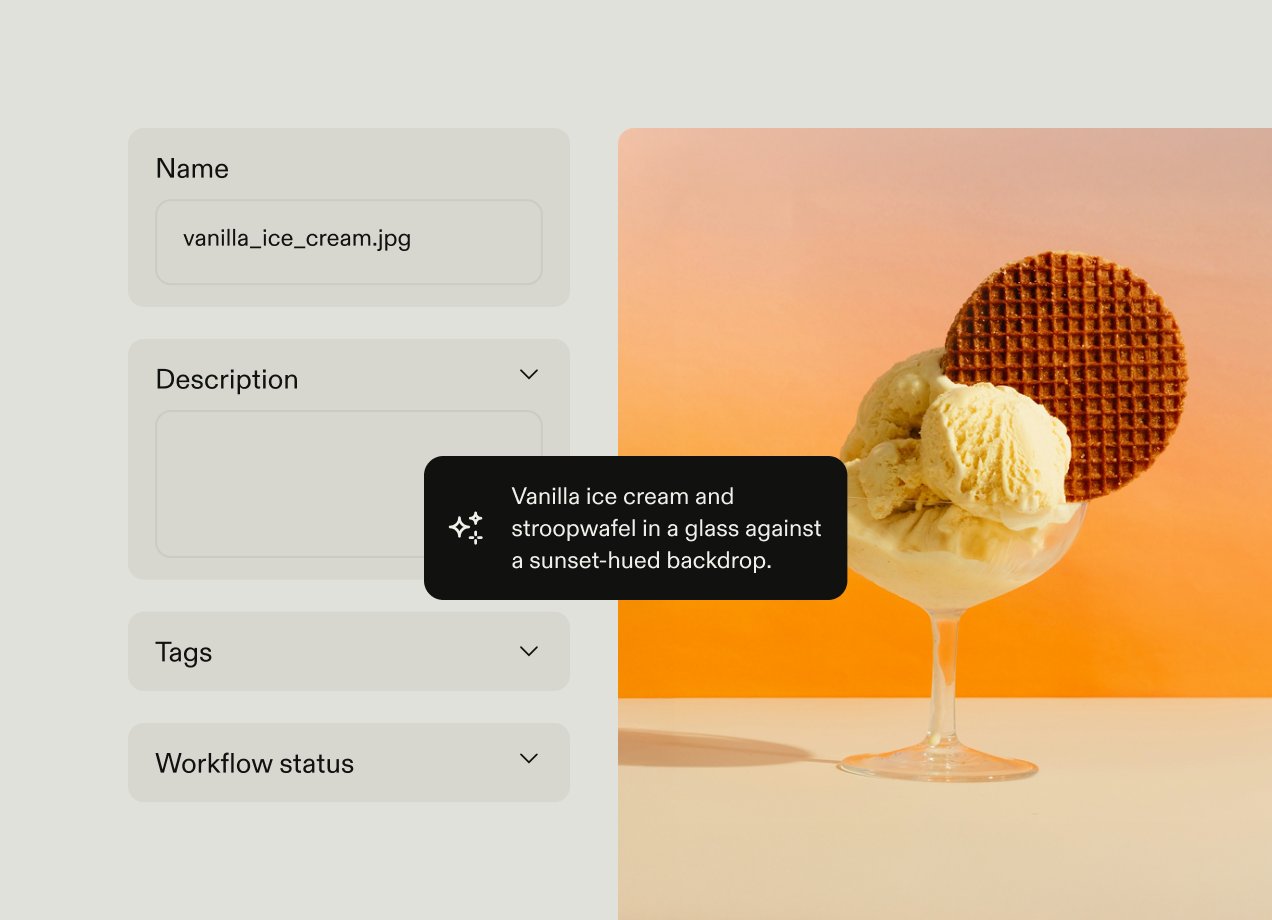
AI takes the manual work out of organizing massive libraries by tagging content automatically. This auto-tagging builds a rich layer of metadata that makes assets easier to find and use. Some AI-driven DAMs also provide predictive metadata, which suggests categories and descriptions based on content analysis. For example, an image with a branded sneaker in a gym setting might be tagged with “fitness, lifestyle, sneaker, product launch” alongside usage rights pulled from the file.
2. Semantic and conversational search
In traditional DAMs, search queries rely on matching assets to the exact keywords. But users often don’t know the exact terms used in the filename or metadata, meaning they struggle to find the assets they need.
AI understands the intent and context behind users’ search queries. It uses natural language processing to interpret phrases, and recognizes synonyms and related concepts, so that finding the right asset is as easy as asking a question.
Instead of typing exact keywords, users can enter queries like “show me product photos with blue backgrounds” or “find last year’s holiday campaign banners with snowflakes” and get accurate results in seconds.
3. Duplicate and version detection
Teams often store multiple versions of the same file in their DAM system without realizing. AI helps reduce clutter by identifying exact and near-duplicates, such as cropped images, resized banners, or slightly altered product shots.
AI technology provides visual similarity detection, hash comparison and pattern recognition, so it can automatically flag and remove unnecessary duplicates or outdated versions.
4. Intelligent content recommendations
Traditional DAMs can’t recommend assets to users. They might show recently-added or recently-viewed files, but the technology can’t recommend files based on user permissions, department, region, or usage history.
AI-powered DAMs provide intelligent content recommendations by analyzing usage patterns and looking for trends — which assets perform well, which are used from common searches, and which assets are frequently used together.
For example, it can suggest campaign assets frequently used together, recommend only assets approved for use in the EMEA region, or show only the latest version of a file.
5. Automated translation and localization
Enterprise brands that operate in lots of different countries need content in multiple languages, and adapted for different markets. Manual localization and translation is time-consuming and can slow down campaigns, as well as creating the risk of inconsistent messaging.
Some AI digital asset management systems include features that support automated translation and localization. These include automated translation of metadata, region-specific asset tags, intelligent content recommendations based on users’ location, and using generative AI to create translated asset variations for different regions.
6. Brand compliance monitoring
Many companies have their brand guidelines documented in static PDFs, so users need to manually check the documents when creating new assets to ensure they’re using brand elements correctly. In practice, that doesn’t often happen, meaning brand teams need to manually police teams’ creative work — a real time drain at enterprise scale.
Some AI-powered DAMs directly integrate with cloud-based brand guidelines. This means the system can enforce brand colors, fonts, and logos automatically. AI also helps enforce brand compliance in other areas, by automatically detecting logo misuse, flagging outdated assets, and monitoring asset licenses to alert users if they’re trying to use files they no longer have the rights for. It supports brand enforcement and compliance across multiple channels, at scale.
7. Workflow automation
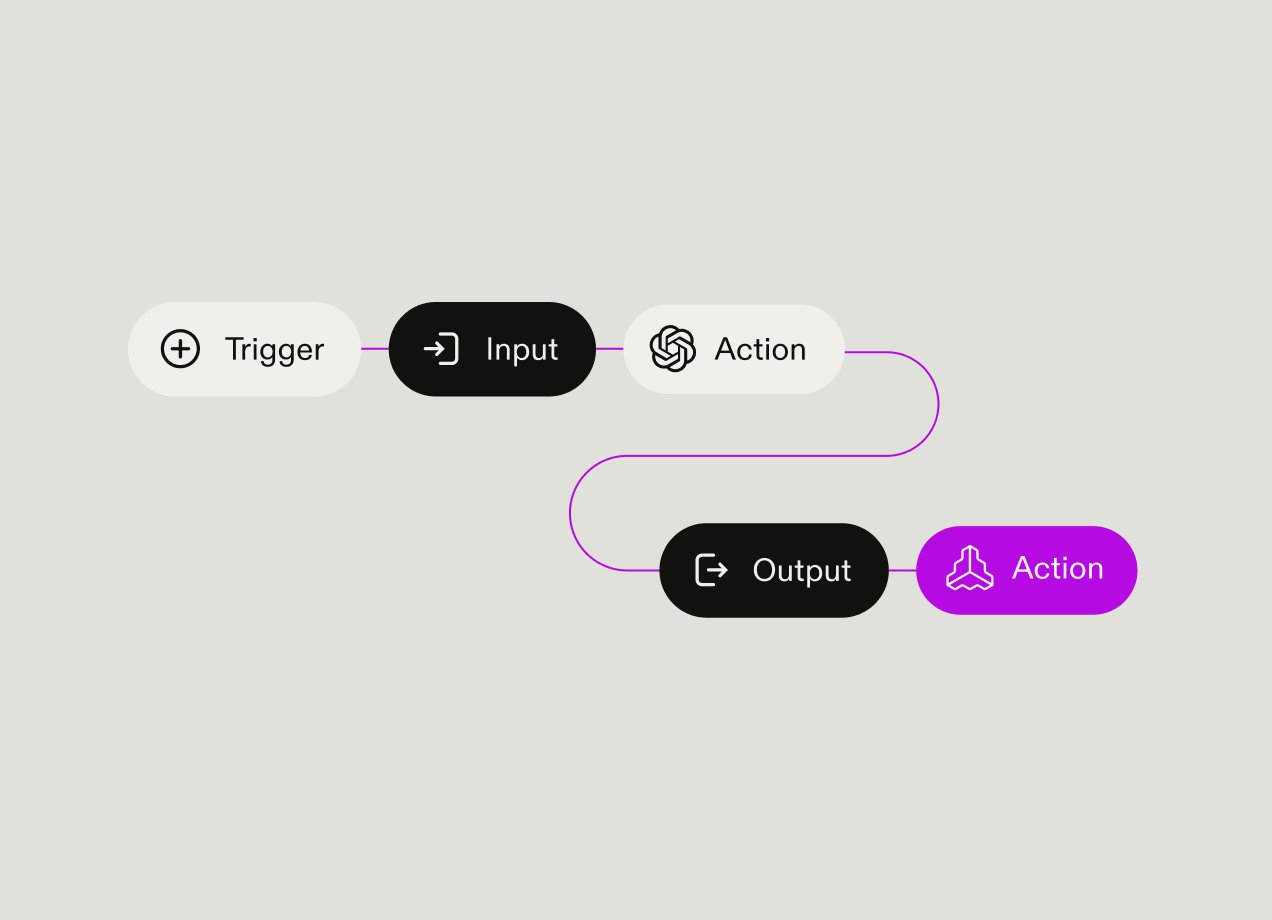
AI brings intelligence to DAM workflows by automating repetitive tasks and responding to workflow triggers in real time. AI can streamline workflows with smart routing based on asset type or by automatically assigning reviewers to prevent bottlenecks.
Rule-based automations can launch AI actions whenever a file is uploaded, a project status changes, or an asset enters a particular folder. This powers automated approval routing, workflow status updates, and compliance checks, ensuring every asset follows your brand and legal guidelines without constant oversight.
Benefits of AI digital asset management
It’s important to understand the benefits of AI digital asset management before you start evaluating platforms or planning a migration from your traditional DAM.
Faster asset discovery
AI-powered semantic search dramatically reduces the time teams spend searching for files. Instead of browsing through multiple levels of folder hierarchies or guessing file names, users quickly retrieve relevant assets through intent-based queries using naturally-phrased questions.
A marketing manager searching for "product photos from last summer’s campaign for the Spanish market" gets relevant results in seconds — rather than submitting a request to a DAM administrator or manually scrolling through folders.
Improved searchability may sound like a small benefit, but it adds up to meaningful productivity gains across marketing and creative teams. Aside from the actual searching time, it also helps speed up production cycles, gives users greater confidence in their asset libraries, and reduces duplicate assets that are created when the original can’t be found.
Reduced operational costs
Automated metadata tagging, asset routing, and compliance monitoring removes a significant volume of manual workload. Consider a global brand that adds hundreds of assets per week to its DAM across multiple regional teams. Without AI, that volume requires dedicated staff just to tag, sort, and route files before they're usable. AI handles that overhead automatically, reducing labor costs or allowing team members to focus on higher-value, strategic work instead.
Improved brand consistency
AI enables teams to produce on-brand content more reliably by enforcing brand standards, flagging non-compliant assets and alerting users to outdated materials before they're used. For a multinational brand managing creative across dozens of markets, this means an outdated logo or last season’s product image gets caught before it runs in a campaign.
AI reduces the risk of off-brand materials slipping through the brand or marketing team’s manual checks. As a result, the company sees fewer compliance errors, a more consistent global brand identity, and reduced legal exposure from misused or unlicensed assets.
Increased campaign speed
Smart automation and AI-assisted search and discovery help reduce production cycles and creative workflows significantly. A regional marketing team preparing a product launch no longer needs to ask their central brand team to create, find, or send them assets. They can independently design or search for materials, confident that the DAM will flag any files that aren’t approved or don’t comply with brand standards.
That reduction in back-and-forth translates directly into shorter time to market and faster regional rollouts, giving companies a meaningful competitive advantage, especially in fast-moving industries.
Measurable content ROI
AI-powered analytics give marketing leaders clear visibility into how assets actually perform — which content drives engagement, which gets reused across campaigns, and which sits untouched.
For example, you might discover that ads using a specific set of lifestyle images consistently outperforms product-only shots across paid channels, directly shaping how the next production budget is allocated. Rather than guessing at what's working, teams can make evidence-based decisions that connect investment in creative and brand assets to measurable business outcomes.
Why Frontify is a leader in AI digital asset management
AI technology in DAM tools is most useful when it’s aligned with effective brand governance. Enterprise companies don’t need to be able to create more brand content — it’s more important they can control content production, enable brand compliance across the organization, and improve brand consistency for all regions and departments.
Frontify’s integrated platform brings together DAM, brand guidelines, templates, and governance-first AI. The platform’s native AI features provide real-time brand guidance and compliance enforcement, driving measurable return on investment. This makes it a top choice for companies looking for a modern DAM that offers AI-powered brand intelligence.
Want to know more? Book a demo to learn more about how Frontify brings AI into its governance-first brand platform.