
AI tools for brand management can help speed up asset creation and distribution, but if that's all you look for then you're ignoring most of the value these tools offer. They should be seen as core investments for driving brand governance and adoption, shaping how teams consistently apply a brand at scale.
Much of the market buzz around AI tools focuses on content generation or hyper-personalized marketing campaigns, yet those flashy capabilities rarely solve the fundamental problem: inconsistent execution across teams and channels. The real opportunity is using AI tools to prevent brand dilution at scale, ensuring the right assets, templates, and rules are applied correctly across every team, region, and partner. The newest part of that opportunity is that teams now do much of their work inside AI assistants, so the brand needs to be something those tools can read, not only something people can look up.

What are AI tools for brand management?
AI brand management tools use artificial intelligence and machine learning to help teams keep their brands consistent and compliant at scale. They slot into digital asset management (DAM) systems, brand guideline platforms, template editors, and governance workflows, automating the hard work of organizing, checking, and distributing brand assets.
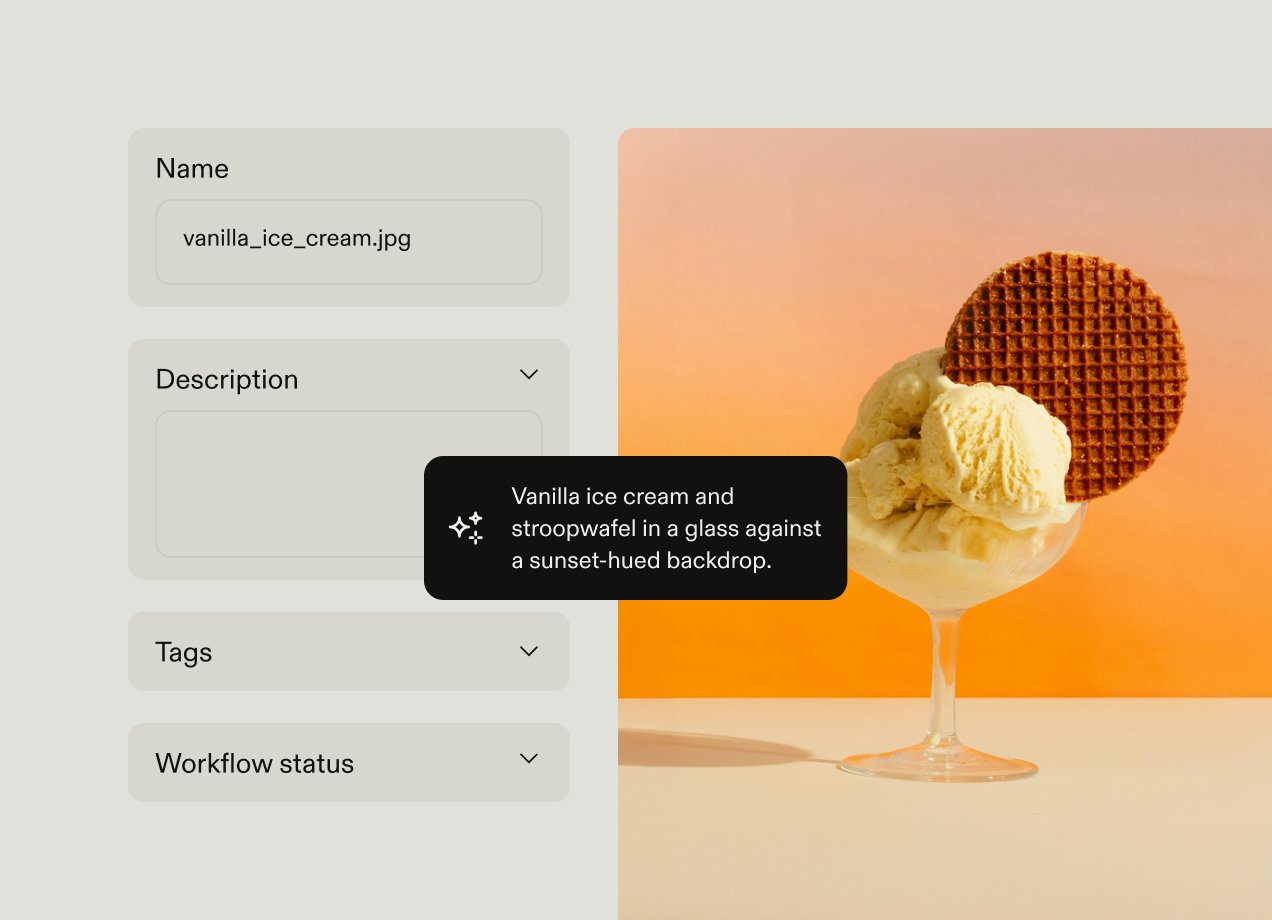
Rather than replacing people, AI brand tools automate repetitive tasks like auto-tagging assets, finding relevant product imagery, and suggesting brand-compliant font and color use, so teams can move faster and make fewer mistakes.
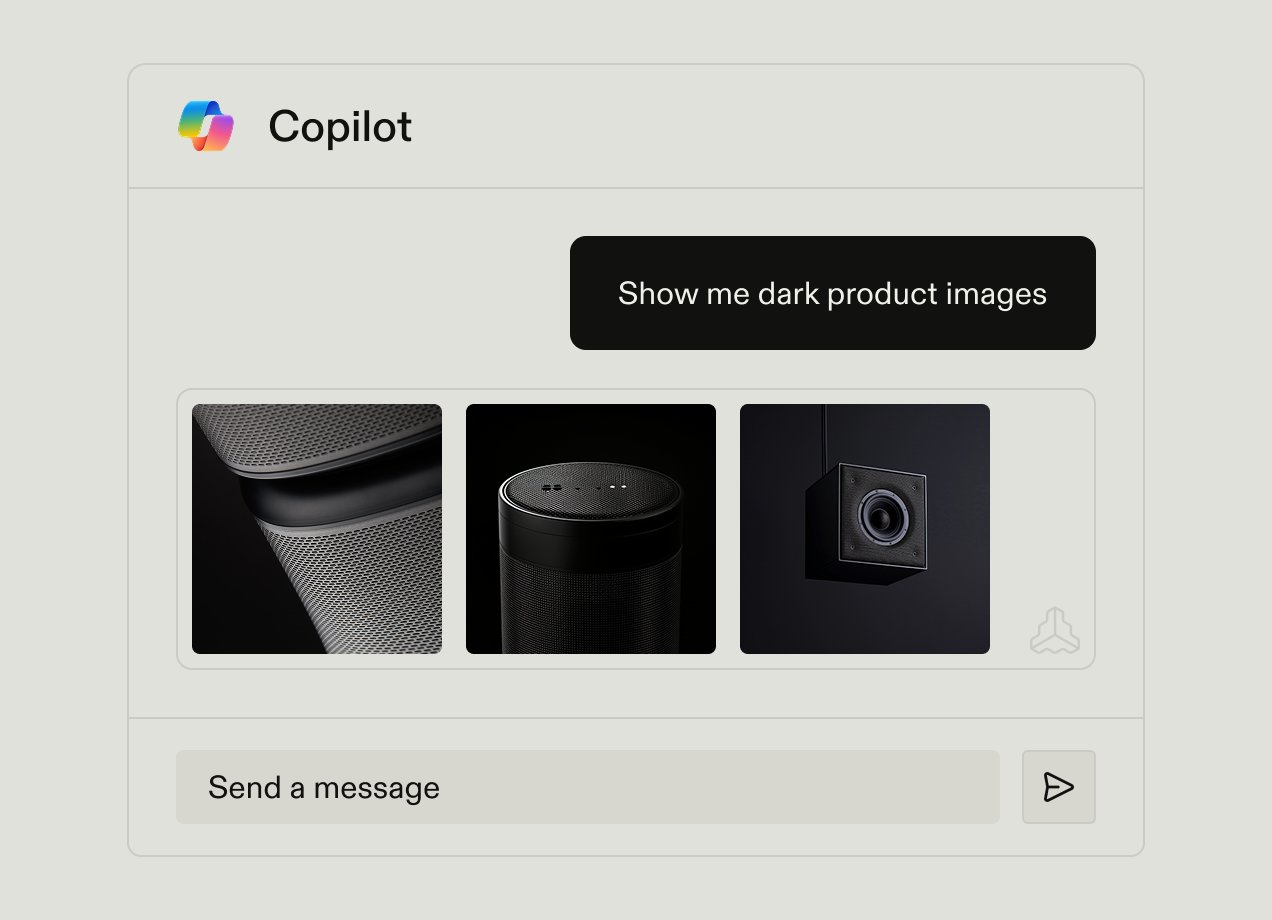
Unlike generic AI marketing tools which are designed to scale marketing output, AI brand management tools support brand governance efforts as well. For example, an AI system can recommend the right tagline for a campaign or flag when an asset doesn't meet accessibility or compliance standards. Or an AI assistant can answer "which logo version do I use on a dark background?" directly from the brand's guidelines, in the user's language.
The evolution from DAM to AI-driven brand governance
Traditional brand tools like DAMs solved asset storage and organization, but they plateaued when it came to brand governance, adoption, and consistency. AI was the next step in that evolution, turning the DAM from a static library into an active system for brand governance. Now, external AI assistants are creating a fourth stage by drawing brand context into the tools where people work.
Stage 1: Static DAMs
Traditional DAMs solved the storage problem: they centralized logos, images, and brand files so teams weren't constantly hunting through multiple folders, personal drives or email attachments. But once the assets were uploaded, the DAM just sat there.
Governance was still manual: someone had to tag assets correctly, enforce usage rules, and interpret brand guidelines. The DAMs existed separately from brand guidelines and creative tools, so users had to constantly switch between tools. Designers had to consult and interpret brand guidelines, and then retrieve the relevant brand assets.
Stage 2: Integrated brand portals
Next came brand portals that combined DAMs, guidelines, and templates into one interface. This improved adoption by reducing friction: teams could find, reference, and apply brand elements without jumping between tools.
However, brand guidelines were still static documents, and templates only went so far to improve consistency. Governance and compliance still relied on people remembering and following the rules, or on your brand team manually reviewing new assets. Brand portals made your brand management system feel more connected and convenient, but it was still passive when it came to protecting the brand.
Stage 3: AI-enabled brand hubs
AI-enabled brand hubs transform DAMs from passive storage libraries to active governance engines that guide every brand interaction. Instead of relying on teams to remember the rules laid out in your brand guidelines, AI helps them apply the rules in the moment: answering questions from the guidelines, surfacing the right logo, and showing image usage rights before assets go live.
It recommends assets based on context and audience, and automates localization by adapting copy and visuals for different markets. This is where many AI-forward platforms sit today. In a Stage 3 system without a documented external connection, the AI may know the brand, but only people working inside the platform benefit.
Stage 4: Brand intelligence
The way people work has shifted again. Marketers draft in ChatGPT, designers generate visuals with AI tools, and developers build in Cursor. Those assistants use whatever brand context they can reach. If the guidelines and assets live in a system the assistant can't query, it guesses, and the governance built in Stage 3 never reaches the work.
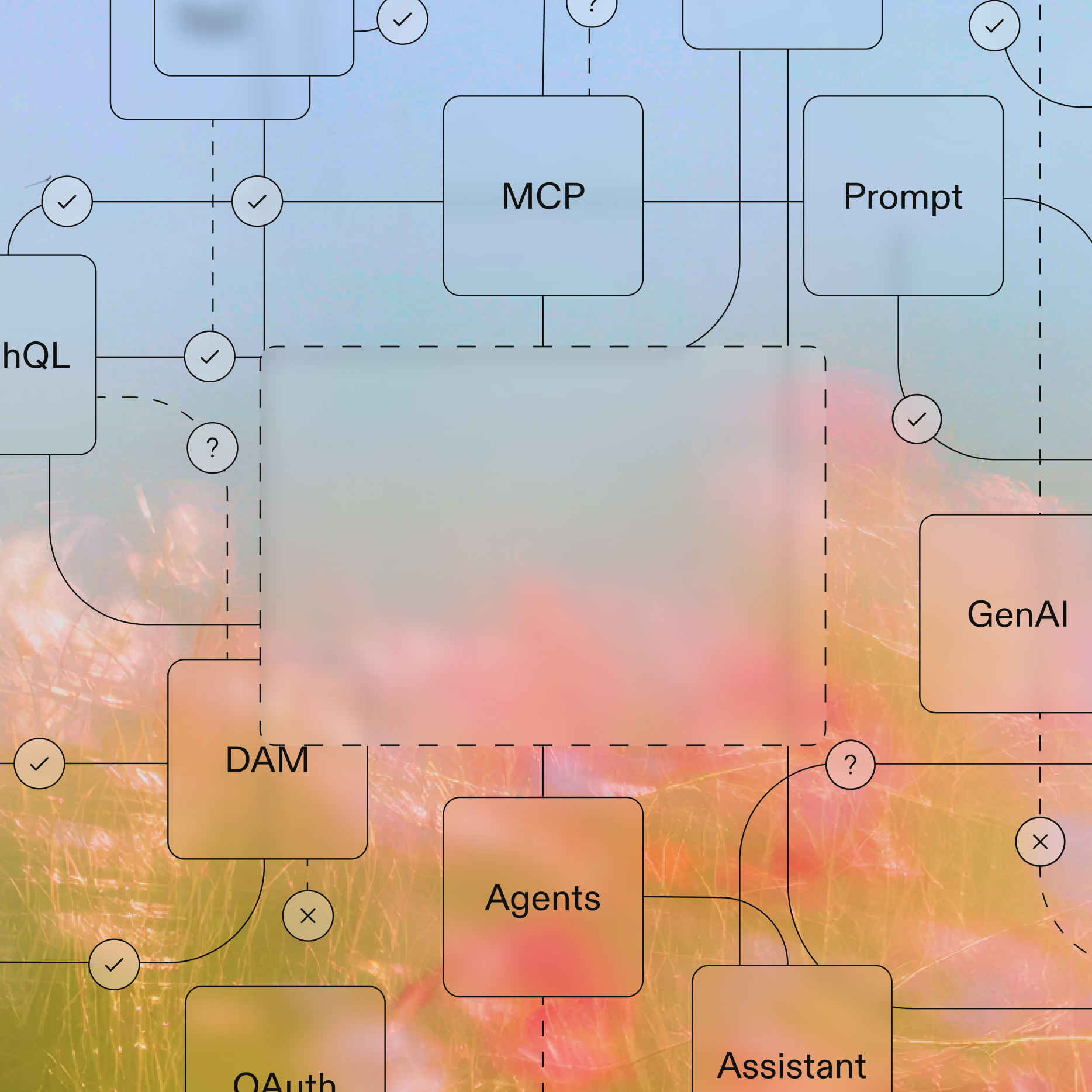
Stage 4 closes that gap. The brand platform exposes its guidelines, assets, and templates through an open standard like the Model Context Protocol (MCP), so external AI tools read the real rules and pull the approved asset rather than approximating. The platform becomes a brand intelligence layer that both people and AI tools draw from.
The Frontify MCP server is one implementation. It connects AI tools like Claude, ChatGPT, and Cursor directly to a brand's assets, guidelines, and templates. It's hosted by Frontify, so there's nothing to install, and it ships a brand-portal pack for reading guidelines alongside packs for asset search, template export, and workflows. Our guides to machine-readable brand guidelines and brand ontology cover how to structure brand knowledge so these tools can use it well.
The question is no longer only whether the platform's AI knows your brand, but whether the AI tools your teams already use can ask it.
3 types of AI brand management tools: Comparing differences and similarities
Companies often think that all AI brand management tools are similar, but they actually fall within three distinct categories that all have different underlying structures and functionality: DAMs with AI add-ons, marketing automation tools, and AI-native platforms.
Understanding these categories should be your first step when comparing AI brand tools, before you start looking into specific tools. These different categories determine how well a tool drives adoption, supports compliance, scales with growth, and integrates into existing workflows, so buyers should compare at the category level before evaluating individual vendors.
DAMs with AI add-ons
Many DAM vendors now offer AI features like auto-tagging, metadata suggestions, and search optimization, making it easier for teams to find the assets they need, faster. However, these tools are often lacking when it comes to improving brand governance: they speed up asset discovery but don't enforce brand rules, approvals, or correct off-brand usage.
These DAM tools work best for organizations that prioritize centralized storage and search efficiency over active brand governance. Examples include:
- Bynder offers AI-powered natural language search and customizable AI agents, alongside its Brand Guidelines and Digital Brand Templates modules.
- Acquia DAM uses AI for tagging, natural language search, generated descriptions and metadata, and translation.
- Brandfolder uses AI auto-tagging and intent-based search to organize brand assets and help people find them.
- Canto pairs AI Visual Search with style guides and portals for sharing brand assets.
- Aprimo positions its DAM as the backbone of content operations, with automated review workflows and AI that reviews content for compliance.
- Adobe Experience Manager Assets is an enterprise DAM with Firefly-powered asset creation, AI tagging, and AI features that scan for expired, duplicate, or non-compliant assets.
Marketing automation tools with brand features
This category covers two kinds of tools: visual content-creation platforms with brand controls, and broader marketing suites that use AI to personalize experiences, optimize campaigns, and scale content delivery across channels. In general, their AI functionality focuses on speeding up content creation and distribution. It's rare to find AI features that support effective brand governance, such as applying brand guidelines consistently or ensuring legal compliance.
Marketing platforms are typically broad suites with lots of tools, like campaign management, CRM, and content automation. Brand management is often just a small module within the broader ecosystem, and as a result, governance is often limited to lightweight brand kits or approval workflows, rather than enterprise-grade governance across every team and asset.
Canva Enterprise is the example focused on creating branded content, with brand kits, brand controls, and design approvals. Adobe GenStudio for Performance Marketing is the example focused on producing AI-assisted campaign content: it generates on-brand copy, image, and video variants for ads and runs AI brand checks before launch. Both are content-creation and campaign tools, not enterprise DAMs, and Adobe pairs GenStudio with Experience Manager Assets for asset management.
AI-native brand platforms
AI-native brand platforms make AI and automation central to brand workflows rather than treating them as bolt-ons to storage. Brand governance is built into how people find, create, and use brand materials, with guidance in the moment, support for multilingual asset creation and localization, and AI-powered asset recommendations that help users choose the right brand materials.
These platforms also provide dynamic brand guidelines that update as rules evolve and contextual asset recommendations tailored to campaigns and use cases. They move beyond simple storage or output-focused automation, positioning governance as core functionality rather than an afterthought. Frontify combines enterprise DAM and brand governance with AI-powered brand intelligence: its AI Brand Assistant answers questions from guidelines with source links, while its MCP server connects external AI tools to approved assets, guidelines, and templates.
How to choose the right AI brand management tool for your organization
When you're comparing different AI brand management tools, it's easy to start your search with a wish-list of features. But it's just as important to consider what your organization needs most from the tool, to ensure it aligns with your organization's ROI priorities and operating model. Each department involved in the decision-making process will have different priorities: creative teams may look for opportunities to cut agency spend, while legal teams will be more focused on reducing compliance-related costs.
Compliance-focused teams
The top priority for legal and compliance-focused teams is avoiding compliance costs such as reducing regulatory risk, preventing fines, and ensuring every asset stands up to audit requirements. The right AI brand management tools embed governance directly into workflows so compliance is built in. Look for platforms with features like:
- Automated compliance checks embedded in creative workflows
- Detailed audit trails to meet regulatory and industry standards
- Role-based permissions to control who can access or edit assets
- Enterprise security certifications such as SOC 2.
Frontify and other enterprise-grade DAM platforms are popular choices for compliance-focused teams as they excel in this area, giving teams the confidence their brand assets are consistent and comply with brand, industry, and regulatory standards.

Global distributed organizations
Global organizations want AI brand management tools to solve the challenge of scaling brand consistency across markets, without slowing down projects or increasing localization costs. The right tools can support these goals by reducing manual creative reviews, automating local adaptations, and providing dedicated brand portals for each region. The most effective tools support:
- Multi-brand structures to manage distinct brand identities
- Regional variations in guidelines, templates, and assets
- Automated approval workflows and publishing processes
- Real-time collaboration across time zones
An AI brand assistant that answers in the user's supported language can also reduce a common source of regional drift: people guessing at rules written in another language.
Globally distributed organizations will also look closely at integrations, as the availability and ease of integration will ensure smooth adoption across diverse tech stacks. Look for deep integrations with CMS, CRM, and creative tools, as well as a strong API ecosystem.
Creative-focused teams
For creative teams, AI-driven brand management helps to eliminate redundant design requests, reducing costly rework and lowering reliance on external agencies. Too often, designers spend significant amounts of time fixing off-brand presentations or recreating assets that already exist. AI brand management tools help reduce time spent on these tasks, allowing creative teams to focus more on high-value work rather than repetitive tasks. Look for tools that:
- Provide AI-powered asset recommendations to help users find the right files quickly
- Offer automated template creation with locked design elements to protect brand consistency while allowing customization
- Deliver intelligent content suggestions tailored to campaign context
- Connect with brand guidelines to support on-brand asset creation
- Expose brand rules and assets to the AI tools designers and developers already work in, so on-brand output happens where the work happens.
By embedding brand rules into templates and workflows, AI brand management platforms help designers balance creativity and control, supporting other departments to self-serve when developing their own brand assets. Tools that strike this balance help organizations scale their output without sacrificing quality.
Common evaluation pitfalls
When comparing AI brand management tools, it's easy to get tripped up by common mistakes that can derail its long-term success. Knowing potential pitfalls up front helps you avoid wasted spend and pick a solution that actually scales with your business.
Chasing AI hype
Many companies start looking for AI-powered tools without a clear idea of how AI functionality can help them or what it can do. They get distracted by flashy AI demos or vague sales promises, only to discover the features don't align with their brand goals or business needs. This often leads to companies investing in tools that look great but fail to deliver tangible benefits such as reducing governance risk or improving brand adoption.
Underestimating integration complexity
A brand management tool is a great addition to your tech stack, but it adds the most value when it's connected to other tools your teams use every day, like your CMS or creative suite. It's easy to assume that all integrations will be similar, but some vendors may only provide shallow integrations with limited functionality, or they may require you to do a lot of the connections yourself. Look for strong APIs and pre-built connectors, as overlooking integration depth and complexity can lead to adoption delays and costly workarounds.
Ignoring scalability needs
An AI brand management tool that works for a single-brand, single-market company may not work as well for multi-brand or market setups. Even if your company only operates in one market right now, consider your future scalability needs: are you likely to expand into new markets or grow by acquiring other brands? If so, you'll need a product that supports multi-brand structures, localization, and real-time collaboration. Focusing too much on your current needs and ignoring future growth goals means you risk facing expensive migrations as your organization scales.
Evaluating AI only inside the platform
The demo shows AI search and a brand assistant, and it looks complete. But if your marketers draft in ChatGPT and your developers build in Cursor, the platform's AI never sees that work unless those tools can reach it. Ask the vendor how external AI assistants connect to the brand, and whether it's documented. A brand platform that's smart on its own and silent everywhere else solves half the problem.
Why Frontify leads in AI-powered brand governance
Frontify is an enterprise DAM at its core, wrapped in brand guidelines, templates, governance, and AI-powered brand intelligence.
The Frontify MCP server connects Claude, ChatGPT, and Cursor directly to the brand's assets, guidelines, and templates. It brings the Stage 4 brand intelligence model into the tools where marketers, designers, and developers already work.
The AI Brand Assistant answers brand questions from the guidelines, links each answer back to the relevant source section, and responds in the user's supported language. It handles the hundreds of small daily requests the brand team would otherwise field, from finding the right logo to interpreting a voice guideline.
While enhanced DAM platforms focus on storage, and marketing automation tools prioritize content output, Frontify puts brand governance at its core, enabling brand adoption and compliance across the organization. It drives measurable return on investment in three key areas:
- Time savings: Spring Health used to spend three to six weeks publishing a single template on its legacy DAM. It now completes a basic template in about 10 minutes and saves 16+ hours per template.
- Reduced compliance risk: people work from current guidelines and approved assets, so fewer outdated or unlicensed files make it into market.
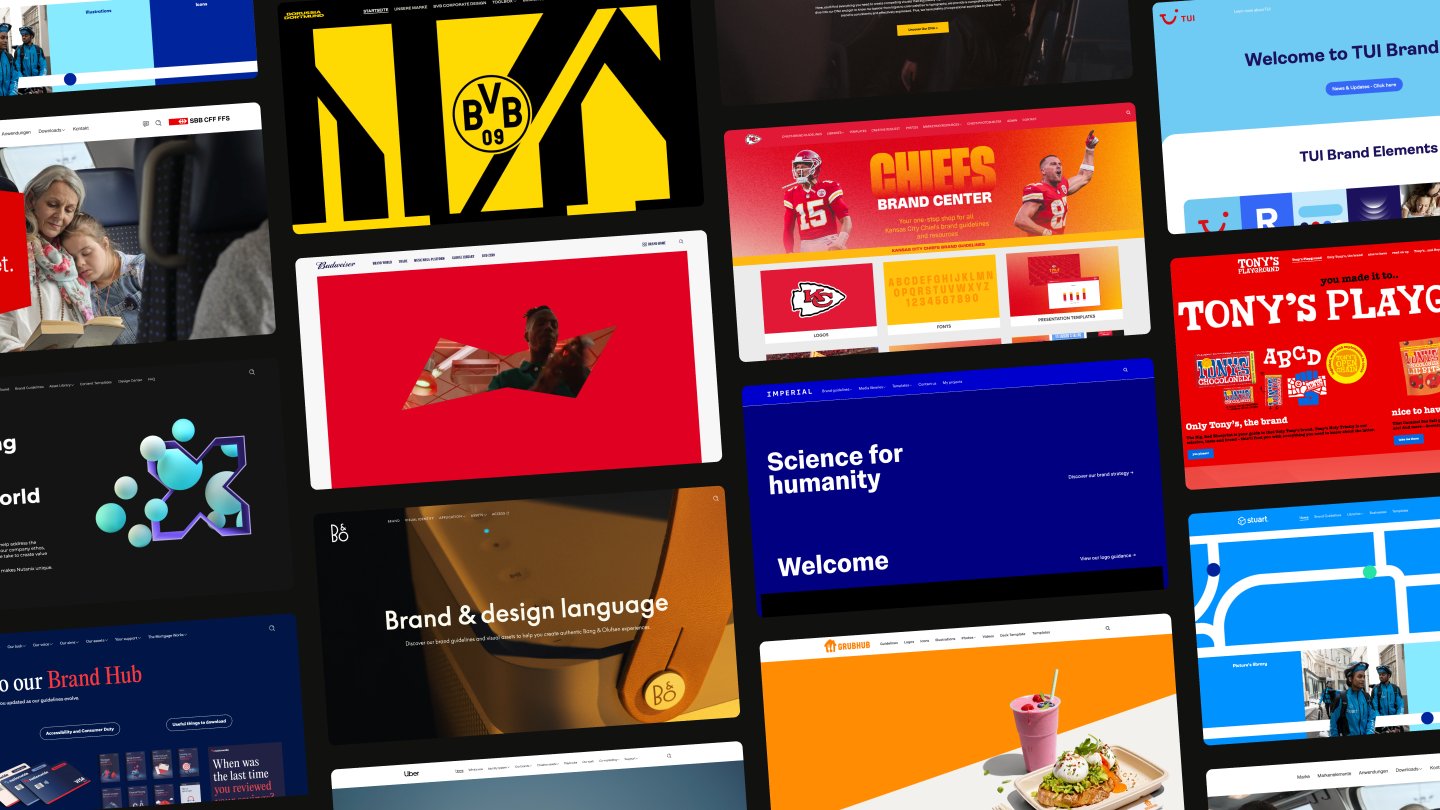
- Brand adoption at scale: Uber's brand hub on Frontify is used by more than 20,000 team members, and usage grew 136% over the last 12 months.
The Frontify platform also grows with your brand: you can manage multiple brands or sub-brands within the platform, and set up different portals for multi-language branding. For example, telecoms giant Telefónica uses Frontify to manage 16 brands for its different global markets. "To be able to manage all brand materials and workflows at the same time in one unique space for all countries and brands is the main benefit and a milestone for Telefónica," said account manager Cristina Terrón Moreno.
Frontify's platform is also a valuable tool and resource during those key moments for enterprise brands, such as during rebrands and brand rollouts. The brand team at Kia knew that its 2021 rebrand would only be successful if their whole team was engaged: "When you make such a dramatic change, your first priority has to be your internal audience and making sure everyone comes along with you," explained Rishaad Sacoor, Head of Brand Strategy Europe. Frontify has become "the main touchpoint between the different teams."
Explore Frontify's AI capabilities, see what leading brands have built with Frontify, or book a demo. If you're moving from a static DAM or brand portal, see how to switch to Frontify.